
Some call it the art of juggling spreadsheets and sanity. Others call it the art of pretending to have your sh*t together while secretly wishing it was Friday. No matter what you call it, the need for work-life balance is real. In today’s episode of UFC, I explore this topic with Chetana and Prakrithi, who have decoded (almost) the work-life conundrum.

Rodney: Is “work-life balance” even the right term? What about “work-life integration”?
Prakrithi: Ever since we stepped into school, our day has been packed with different activities from attending school, coaching classes, tuition, pursuing certain interests like sports, dance or any form of art, spending time at home and having playtime. Did anyone call this phase a school-life balance? Then why this fancy term now?
This fancy term, created by the internet, is indirectly forcing people to somehow hate their life and complain of how busy and monotonous their day is , instead of consciously making them work on it. To be honest, we are already trained since our early days, to somehow integrate all the aspects of our life and find happiness and joy in the things we do and if we can remind ourselves about this, it could make a drastic change in how we see our own life.
Chetana: Life as a whole encompasses various aspects. Work is just one of them. Striking a “balance” between work and life sounds good to the ears, but it would mean that we treat work and life as separate entities. Rather than striking a balance, harmonising work life and life beyond work seems to be more ideal. Work-life integration seems to be a better fit. Especially now when there are more flexible options such as working from home and having flexible hours, it is more manageable to give time to various areas of our life.
Rodney: Are there any signs that can indicate burnout?
Prakrithi: When machines have their downtime, how can humans not have one? Yes, we do get tired, exhausted and drained out some days and that is perfectly NATURAL. It is your brain trying to signal you to take a step back, relax and breathe. Unable to concentrate, and feeling fatigued or agitated are a few signs that indicate burnout. If one is conscious of their own body and mind, it’s easier to take that step back and catch your breath before your system dreadfully crashes down. So to be conscious of yourself is a very important aspect.
Chetana: Overworking, inadequate sleep, poor nutrition, and not working out are classic signs of burnout. But beyond the obvious signs, brain fog, inability to think, disinterest in pursuing hobbies and interests, changes in appetite, falling sick frequently, and neglecting self-care are other indicators of burnout.
Rodney: How can we manage our time effectively to create space for both work and personal life?
Prakrithi: I have placed my foot in multiple boats and trying to multitask a lot of things in life at the moment and I don’t know if I am the right person to answer this question yet. Despite that fact, when you eventually love what you do, you somehow have enough hours in the day to be able to do it all. Some days you just can’t and some days feel great but as long as you can find joy and happiness in whatever you do, your life is EFFECTIVE.
Having fixed schedules and timetables have helped me some days and then there are days I have felt overwhelmed by just the sight of my lengthy to-do list. I always begin my day by jotting down my to-do tasks which also include my interests. I cannot function without organising my chaos in my head and converting them to achievable tasks of the day and the joy of striking them out is bliss on another level. But I also try to not let that list pressure me and instead enjoy the process. So sometimes, it is just important to go with the flow of your mind and be okay with a half-striked-out list.
Chetana: Though it is a challenge to give time to everything important to us, it is still possible with effective time management and discipline. An easy way to get a head start on it is to figure out what the non-negotiable activities in your daily life are. This could include exercise, 7-8 hours of sleep, spending time with family, and giving time to your hobbies.
There is a method called “time blocking” where you divide your day into blocks of time and dedicate each block to a specific task or activity. I did a lot of trial and error to figure out the best way to give time to both work and life beyond work. Not all days are alike. But for the most part, I have managed to give time to work, health, hobbies, and family/friends. So, there is no set way to manage your time well. It entirely depends on your schedules and commitments.
Rodney: How can we prioritise self-care practises like sleep, exercise and hobbies to maintain well-being?
Prakrithi: it is very essential to acknowledge that a healthy mind and body shall always perform effectively and efficiently. Having a sound sleep, taking enough breaks especially when your body signals to and even taking your mind away from a stressful environment is very crucial and shouldn’t be compromised to a large extent. Once we acknowledge this fact, we can consciously work on it to achieve the same. On a personal note, I have been working on it myself. I have been trying to write more, read more, dance more and also travel more. I have enrolled myself for a dance class to be able to work on my physical well-being. And I have been taking breaks from everything when I know that I need one. With age, our body might not be able to stress as much as earlier and understanding what my body and mind needs is what I am currently working on.
Chetana: The concept of “self-care” has become a rage now. We see a lot of Pinterest and Instagram posts about self-care and somehow it has projected an image of doing something luxurious and fancy to take care of yourself. But self-care truly boils down to working on yourself, improving your life, giving attention to wellness and just well.. living a life you are proud of.
The busy lives that we lead leave us with little to no time to focus on ourselves. But we have to keep giving ourselves gentle reminders that there is nothing more important than our well-being. As answered in the previous question, we need to determine what are our daily non-negotiables. And once done, accommodate them in our schedules. To me, 7-8 hours of sleep, working out, and reading/writing are daily non-negotiables. I ensure that I set aside time and work around the time I have scheduled for these.
Rodney: Work-life balance is a luxury for some – for instance, working mothers or people who work multiple jobs to support themselves. How can we make it attainable for everyone?
Prakrithi: I understand that taking time from your day to do something for yourself is a luxury for some. One can afford a few hours and one can afford only a few minutes. A housewife considers sipping her morning cup of tea while sitting on the balcony as her “me time” and a working woman might consider the commute time from home to the workplace as her “me time”.
The “me time” is when you can hear your thoughts running in your mind which is something we all try to avoid. So it might not be necessary that one’s me-time involves immense money or time. We can make it attainable to all by respecting that each one of us needs that space – irrespective of gender, age and working status. If we all become considerate and respect each other’s way of life, I believe we all could attain much more contentment.
Chetana: Gone are the days when working mothers or people who work multiple jobs had to take care of every single chore and task. With the number of working population increasing, supportive arrangements have surfaced.
Workplaces offering flexible hours, crèche facilities, and paid leaves, are some ways that offer working mothers some respite from the otherwise challenging daily schedules. More workplaces and employers need to be accommodating and understanding of the fact that their employees have a life beyond work. There is a need for a mindset shift of viewing employees as assets rather than tools.
Also, there is a pressing need to increase the minimum wage limit given the inflating economy. Women are especially underpaid for the skills that they possess. To acknowledge their efforts, they need to be paid fair.
There are still a lot of misconceptions in society that especially a woman needs to handle everything to the T. This will eventually lead to burnout and stress. There is absolutely nothing wrong in taking additional help and support. This paves the way for those who hardly have the time to focus on themselves.
Rodney: You win the lottery. How does your work-life balance change (or not change) after becoming financially independent?
Prakrithi: Firstly, I shall pinch myself 100 times to check if it’s a dream because I never get lucky in these sorts. But yet, let’s still manifest it and answer your question, Rodney.
I don’t think that I would give up on the ‘work’ aspect of my life. I am slightly obsessed with working and keeping my day packed and trying to make a difference to the people around me. But the definition of working will change. It will no longer be the source of bread and butter and instead, be the source of my contentment. I have always wanted to try different jobs and fields available even if not linked to my profession. Inconsistency cannot be afforded when the job is what gives you money but now this lottery would allow me to do so. So yes, I would try to get into different shoes and stilettos.
Oh, and I would travel more. Travelling and watching people with their own stories always brings me a fresh perspective on life.
Ouch…. that reminds me, I did not win a lottery, yet!
Chetana: Firstly, I would be Raju of Hera Pheri, go climb the terrace, squat down and scream, “Paisa hi paisa hoga.”
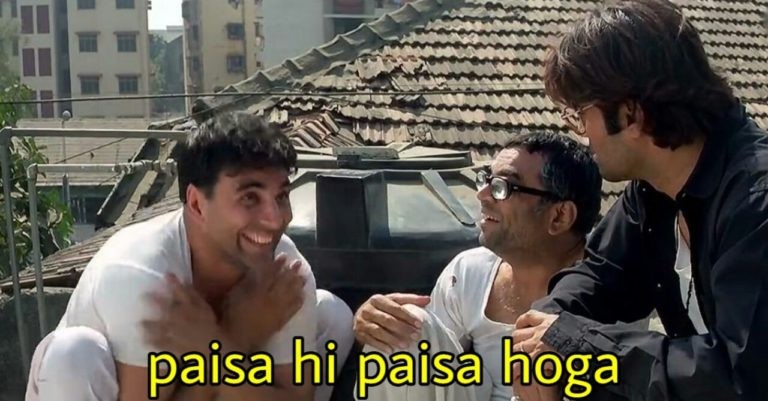
After the initial excitement and celebration, I will check how MUCH have I won. I will feel sad for a moment that I have to pay 30% tax on the amount that I have earned.
After mixed feelings of exhilaration and sadness, I will finally take a leap of faith and take a step forward in pursuing my passion project. While at it, I will also plan to invest the money well and also donate some to charity.
Additionally, I would go and buy ALL the books I want to own, build a house with floor-to-ceiling bookshelves and fill them up with books, books and more books.
Rodney: Insights from Chetana and Prakrithi have given a refined perspective on how one can maintain a healthy work life and an enriching personal life. I was thinking of making a spreadsheet joke here, but it will end up being a total drag (pun forcefully intended).
Two cents from me – work, relationships, hobbies, mental and physical health are all equally important. There is no hard and fast rule to follow for getting your life sorted. Do your own thing, do whatever you think is best for you!
Hope you enjoyed our first episode. Do let us know your views on today’s episode and any topic recommendations for future episodes in the comments below.
This blog post will also be hosted on Prakrithi’s blog: Contemplation. Click here to read!

 The Soulful Nib